Plan Smarter. Grow Stronger. Don’t miss our latest SME strategies.


Why Most AI Projects Fail — and What to Fix First?

85% of AI projects fail. You’ve seen the stat. But here’s the question that rarely gets answered: why?
We’re in the middle of an AI gold rush. Every tech vendor is “AI-powered,” every dashboard product has a predictive toggle, and every boardroom wants to know where the machine learning roadmap is. The pressure is on.
But behind the scenes, most organizations are struggling to answer even basic questions: Where is our data? Who owns it? Why are our KPIs misaligned? And why does everyone hate their dashboards?
These aren’t technology problems. They’re strategy problems — and they’re the real reason why AI projects fail.
The Illusion of Readiness
Executives often assume that because their teams have data, or have invested in tools like Snowflake, dbt, or Tableau, they’re ready to build models.
But data volume is not data readiness. And AI requires more than infrastructure.
AI-ready organizations share common traits:
- Clarity about what they’re solving
- Consistency in how data is governed and accessed
- Ownership over data domains
- Trust in foundational metrics
When those pieces are missing, here’s what happens:
- Data scientists spend 80% of their time cleaning and reconciling
- Projects stall due to inconsistent logic and duplicative KPIs
- Business stakeholders disengage — they don’t trust the outputs
- AI becomes a slide in the roadmap deck, not an operational asset
Why Most AI Projects Fail
According to Gartner, up to 85% of AI projects fail to deliver business value. That’s not due to bad models — it's because the foundations aren’t there.
The real culprits:
- No clear use case linked to business outcomes
- Messy or siloed data with low observability
- Lack of governance — no ownership, access control, or lineage
- Disconnected teams — BI, data science, and ops don’t speak the same language
- Tool-first thinking — shiny platforms without strategy
And once a project stalls, companies often do the worst thing possible: they hire more people or buy more software.
More dashboards don’t solve broken trust. More pipelines don’t create alignment.
What to Fix First
If you want to use AI effectively — and sustainably — you need to stop thinking like a tech buyer and start thinking like a systems designer.
Here’s where to start:
1. Audit Your Foundation
Before you model anything, assess:
- Where is your data stored? Is it centralized?
- Who owns key domains (e.g. finance, product, marketing)?
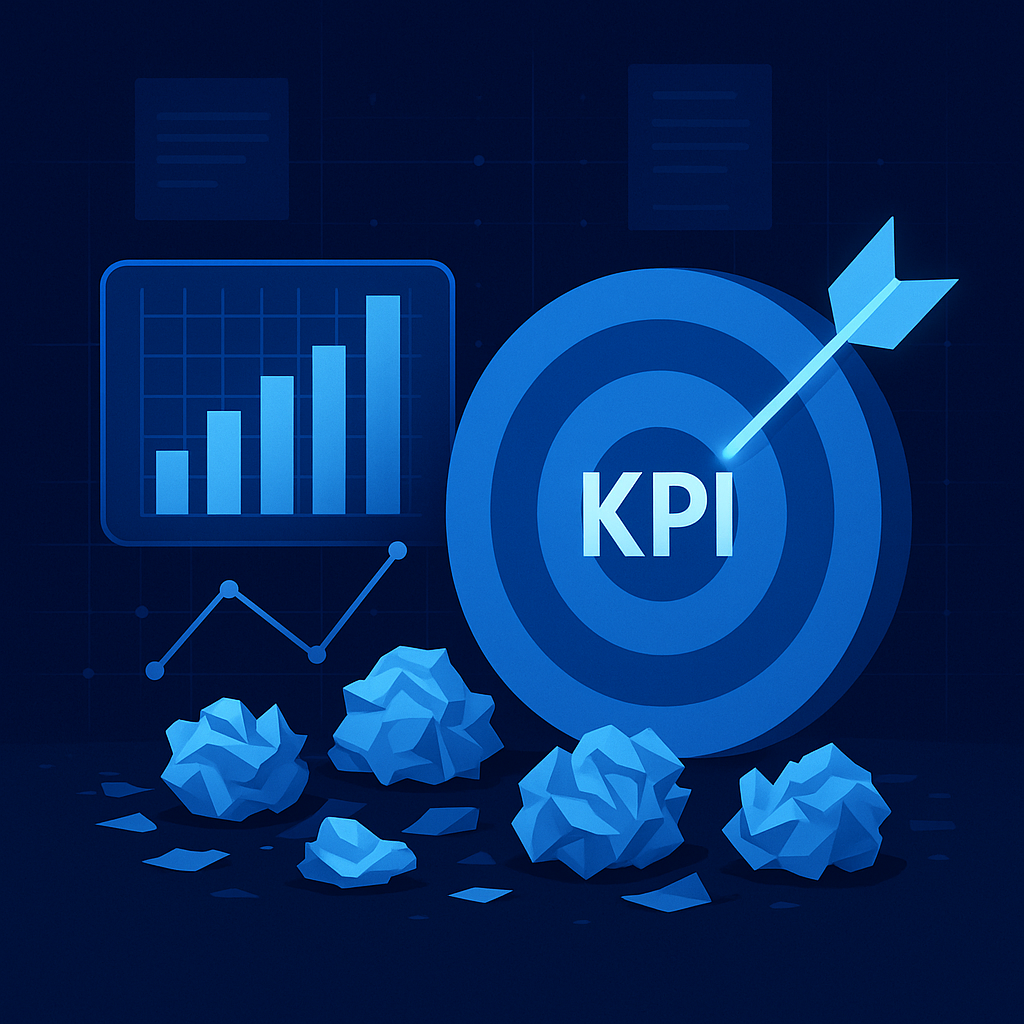
- Are KPIs defined the same across tools and teams?
- Do you have governance around quality, access, and versioning?
If you can’t answer those questions confidently — you’re not ready.
2. Link Use Cases to Business Outcomes
“Predictive analytics” isn’t a strategy. “Improve forecast accuracy by 10% to reduce inventory holding costs” is.
You need clear, measurable AI/analytics goals tied to real business pain. Without that, you’re just doing experiments.
3. Align Stakeholders Around One Version of the Truth
AI cannot succeed in a KPI war zone. If sales, ops, and finance don’t trust the same metrics — good luck aligning on predictive outputs.
Start with trust. Invest in clarity.
Ready to scale with structure, not chaos?
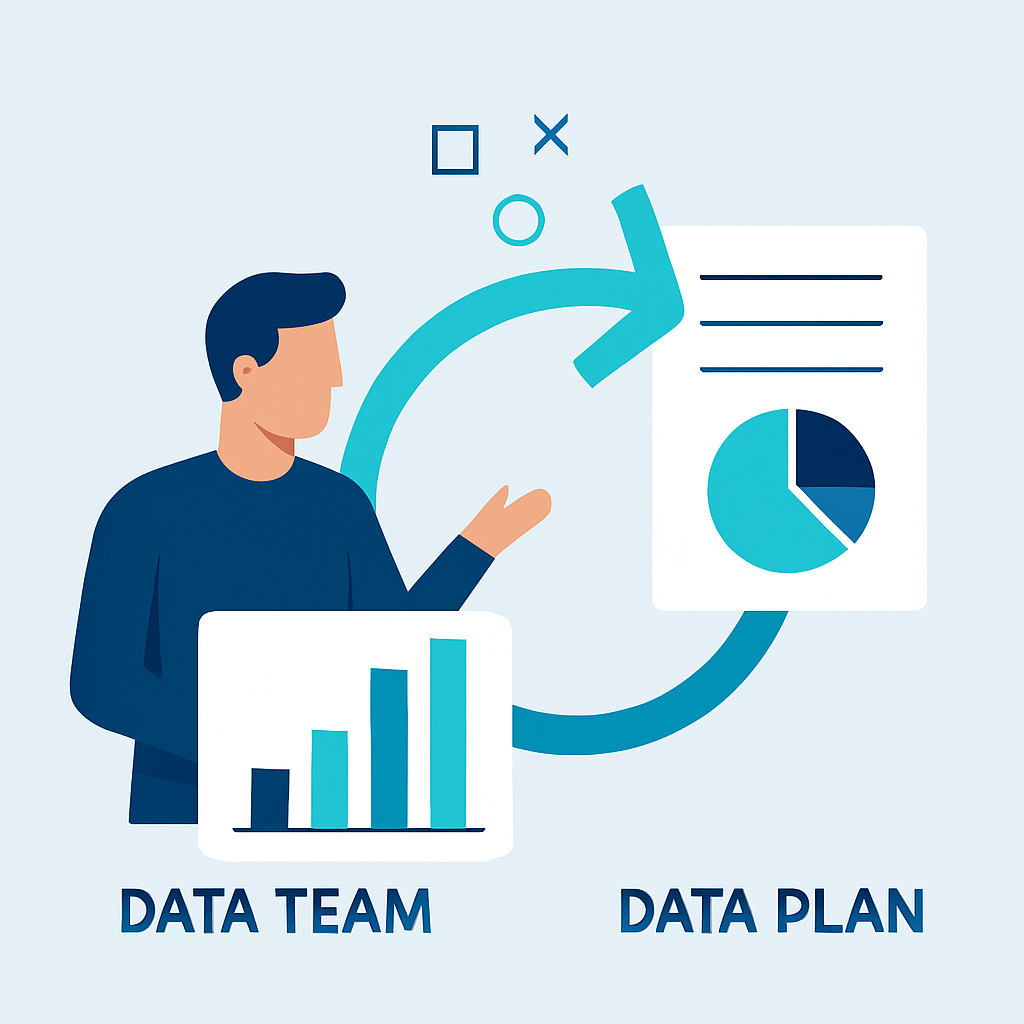
We offer a Data & Analytics Team Organization engagement to help you: Define the roles you actually need (and when). Design a lightweight, scalable data operating model. Avoid overhiring or building a team around the wrong goals. Get clarity on whether to hire, outsource, or wait. You don’t need a 5-person team to be data-driven.You need a plan that supports your business — not just your dashboards.
Book Your Free Consultation

No hype. No headcount upsell.
We don’t push tools or teams you don’t need. Our focus is delivering strategy, clarity, and scalable execution — not selling hours. Every engagement is lean, senior-led, and tied to business outcomes.

Trusted by leaders who don’t have time for fluff
We work with decision-makers who need clarity, not noise. No jargon, no inflated roadmaps, no vendor lock-in — just honest, senior-level guidance that translates business goals into data outcomes. Every engagement is designed to save time, reduce risk, and deliver what actually moves the needle.
.svg)
Taylored solutions, highest quality for sustainable growth and success
We deliver tailored, high-quality solutions grounded in deep analysis and transparent communication — ensuring no part of your data landscape is overlooked. Our holistic approach supports sustainable growth, not quick fixes.

© 2026 Panatila All rights reserved.
.svg)